Banking in Canada for Brits: Accounts, Credit, and Getting Your Money Across
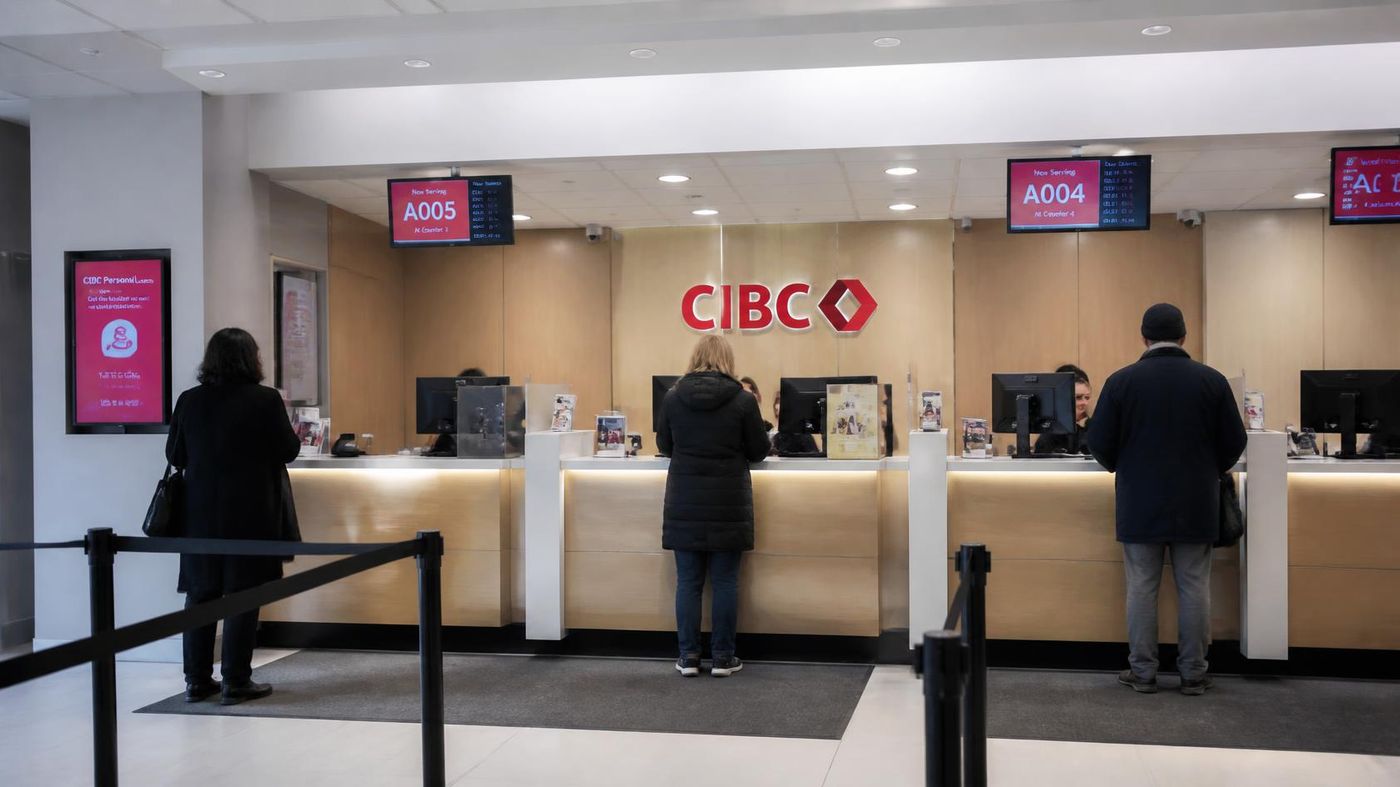
One of the first things you'll notice about Canadian banking is that it's not like the UK at all. Monthly account fees are normal, free banking is the exception rather than the rule, and you'll need to build your credit score from zero. The good news is that most major Canadian banks have newcomer programs specifically designed for people arriving from overseas, and if you time it right, you can open an account before you even land.
Opening a Bank Account Before You Arrive
Several Canadian banks let you start the account-opening process online from the UK. This means you can have an account number and debit card waiting for you when you arrive, or at least have most of the paperwork done so your first branch visit is quick.
Banks with pre-arrival or newcomer programs:
- RBC (Royal Bank of Canada) - their newcomer program lets you apply online from overseas. No monthly fee for the first year on select accounts, and no minimum balance requirement.
- HSBC Canada - no longer operates as an independent retail bank in Canada. RBC completed its acquisition of HSBC Bank Canada in 2024, and existing HSBC Canada branches and personal accounts moved to RBC. If you bank with HSBC in the UK, apply through RBC's newcomer programme instead.
- TD Canada Trust - newcomer banking package with no monthly fees for one year. Extensive branch and ATM network.
- BMO (Bank of Montreal) - NewStart program with fee waivers and a secured credit card to help build credit.
- Scotiabank - StartRight program for newcomers with fee waivers and a no-fee bank account for the first year.
Monthly Fees: Welcome to Canadian Banking
This is the part that shocks most Brits. In the UK, free current accounts are standard. In Canada, most chequing accounts charge a monthly fee, typically CAD $4-$17 depending on the plan. You get a set number of transactions included, and going over costs extra.
Basic chequing account
CAD $4-$7/month
Limited transactions (12-25/month)
All-inclusive chequing
CAD $13-$17/month
Unlimited transactions, sometimes waived with minimum balance
Savings account
Usually free
But interest rates are low at the big banks
Interac e-Transfer
Free at most banks
Canada's equivalent of bank transfers, widely used
Ways to avoid or reduce fees:
- Keep a minimum balance (often CAD $3,000-$5,000) to waive the monthly fee
- Use a digital bank like Simplii Financial (owned by CIBC) or Tangerine (owned by Scotiabank), both of which offer no-fee chequing accounts
- Take advantage of newcomer fee waivers (usually 6-12 months)
Building Credit in Canada
Your UK credit history doesn't transfer to Canada. You start with no credit score, which is actually worse than having a bad one in some ways, because lenders have nothing to assess you on.
Building credit in Canada takes time, but you can speed it up:
- Get a secured credit card - you put down a deposit (typically CAD $500-$1,000) as security, and the bank gives you a credit card with that amount as your limit. Use it for small purchases and pay it off in full every month.
- Get a mobile phone contract - phone plan payments are reported to credit bureaus in Canada, unlike the UK.
- Pay rent through a reporting service - some services will report your rent payments to Equifax or TransUnion Canada to help build your profile.
- Ask RBC about your UK banking relationship - HSBC's old cross-border credit history pathway no longer applies in Canada, since RBC completed its acquisition of HSBC Bank Canada in 2024. If you bank with HSBC UK, ask RBC directly whether that history can support your application.
Your SIN: The Key to Everything Financial
Your Social Insurance Number (SIN) is Canada's equivalent of a National Insurance number. You'll need it for employment, tax, and most banking activities. Apply for your SIN at a Service Canada office as soon as you arrive, it's free and you can often get it the same day.
You can open a basic bank account without a SIN, but you'll need one within 90 days to keep the account active and to set up things like a TFSA or RRSP.
TFSA and RRSP: Canada's Tax-Advantaged Accounts
Canada has two main tax-advantaged savings vehicles that you should understand early:
- TFSA (Tax-Free Savings Account) - similar in concept to a UK ISA. Contributions aren't tax-deductible, but all growth and withdrawals are tax-free. Annual contribution limit is CAD $7,000 (2024 onwards). You only start accumulating contribution room from the year you become a Canadian tax resident.
- RRSP (Registered Retirement Savings Plan) - similar to a UK pension. Contributions are tax-deductible, growth is tax-sheltered, and you pay tax when you withdraw in retirement. Contribution limit is 18% of your previous year's earned income, up to a cap.
Transferring Money from the UK
You'll likely need to move a significant amount of money from the UK to Canada, whether it's savings, a house sale, or just enough to get started. The exchange rate you get matters enormously on large transfers.
Options, from cheapest to most expensive:
- Wise (formerly TransferWise) - transparent fees, mid-market exchange rate, fast. Best for most transfers under CAD $100,000.
- OFX or TorFX - foreign exchange brokers, better rates than banks on large transfers. You can lock in a rate in advance if you're worried about currency fluctuations.
- Your bank's international transfer - convenient but usually the worst exchange rate. Banks typically add a 2-4% markup on the mid-market rate, which on a GBP 50,000 transfer could cost you over GBP 1,000 in hidden fees.
UK Pension and State Pension
You can claim your UK State Pension from Canada if you've made enough NI contributions. The UK and Canada have a reciprocal social security agreement, which means your UK pension will be paid to you in Canada and will receive annual increases (unlike some other countries where UK pensions are frozen).
For workplace pensions, you generally can't transfer a UK pension directly into a Canadian RRSP. Leave it in the UK and draw on it later, or take advice from a qualified cross-border financial advisor on your options.
Everyday Banking Differences
A few things that will feel different coming from UK banking:
- Cheques are still a thing - landlords, some employers, and government agencies still use paper cheques in Canada. You may need to order a chequebook.
- Interac e-Transfer - the standard way to send money between people. Works like a faster bank transfer, and most banks include it free. You'll use this constantly.
- Tap to pay - widely available across Canada, just like the UK. Apple Pay and Google Pay are both well supported.
- No Faster Payments equivalent - bank-to-bank transfers between institutions can take 1-2 business days. Interac e-Transfer is usually instant or same-day within the same bank.
- Tipping culture - factor 15-20% tips into your budget for restaurants, bars, hairdressers, taxis, and food delivery. This is expected in Canada, not optional like in the UK.
Tax: What UK Expats Need to Know
Canada and the UK have a double taxation agreement, so you won't be taxed twice on the same income. But you do need to understand the basics:
- Once you're a Canadian tax resident, you're taxed on your worldwide income
- You file a Canadian tax return annually (deadline is usually 30 April)
- Canadian tax is a combination of federal and provincial taxes, so your rate depends on which province you live in
- UK rental income or investment income may still be taxable in the UK, with a credit claimed in Canada under the DTA
Your first Canadian tax return can be complex. Consider using a tax accountant who specialises in newcomers or cross-border situations for at least the first year.
Moving from the UK to Canada?
Our free checklist covers everything you need to sort before, during, and after the move. Banking, healthcare, visas, housing, and the stuff nobody tells you.
Information in this article is based on publicly available data from RBC, TD, BMO, Scotiabank, CIBC, the Canada Revenue Agency, and HMRC as of August 2026. Banking fees, exchange rates, and tax rules can change, so verify current details before making financial decisions.
Sorting out the money side of the move is just one piece of it. If you'd like the whole thing planned out, visas, housing, healthcare and your first 90 days, Ultimate Relocation Guide is a paid, step-by-step guide (from AUD $59) that covers it end to end.
Banking is one piece of settling in. Our Moving to Canada from the UK hub brings together the rest of the corridor: visas, healthcare, cost of living and more.