Tax in New Zealand for Australians: First Year Guide
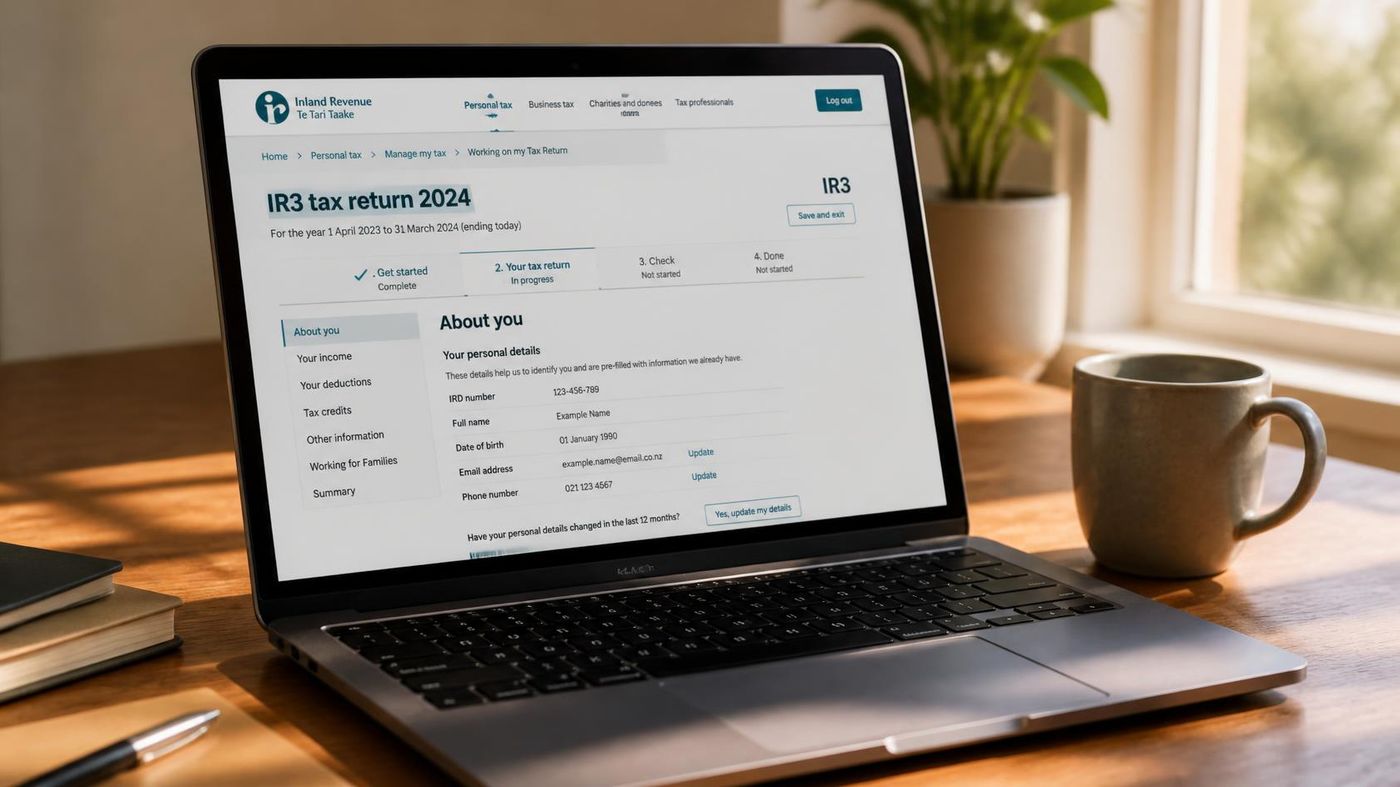
New Zealand's tax system will feel broadly familiar to Australians, PAYE, a progressive scale, an annual return process, but the details differ enough to catch newcomers out, starting with the tax year itself.
The tax year is different
New Zealand's tax year runs from 1 April to 31 March, not July to June like Australia's financial year. If you move mid-year, your first New Zealand tax year will be a partial one, running from your arrival date to the following 31 March.
When you become a NZ tax resident
New Zealand uses a residency-based system. If you're a New Zealand tax resident, you're taxed on your worldwide income; if you're a non-resident, only your NZ-sourced income is taxed. Broadly, you become a tax resident once you're in New Zealand for more than 183 days in any 12-month period, or earlier if you establish a "permanent place of abode" here, such as taking up long-term work and a lease. You'll also need to consider when you stop being an Australian tax resident, since Australia taxes residents on worldwide income too; get advice from a tax professional on your exact departure date if your situation isn't straightforward.
Income tax rates
As at 26 August 2026, New Zealand's individual income tax brackets, published by Inland Revenue (ird.govt.nz), are:
$0 - $15,600
10.5%
Lowest bracket
$15,601 - $53,500
17.5%
$53,501 - $78,100
30%
$78,101 - $180,000
33%
Income above $180,000 is taxed at 39%. Unlike Australia, New Zealand has no general tax-free threshold; the 10.5% rate applies from the first dollar earned.
PAYE and no annual filing requirement for most employees
Most New Zealand employees are taxed through PAYE (Pay As You Earn), deducted automatically from every pay by your employer, similar to Australia's PAYG. Unlike Australia, most PAYE-only employees in New Zealand don't need to file an annual tax return at all; IRD squares things up automatically if your only income is employment income and the right tax code was used throughout the year. You may still want to check your income tax assessment through myIR each year, since you could be owed a refund, particularly in a year where you changed jobs or income levels partway through.
No general capital gains tax, but check the bright-line rules
New Zealand doesn't have a general capital gains tax the way Australia does, which surprises a lot of Australian arrivals. There are exceptions: the "bright-line test" can tax gains on residential property sold within a set period of purchase, and some other asset sales can be treated as taxable income depending on your intent when you bought them. If you're planning to buy and sell property, or you have investments you're bringing across from Australia, get specific advice rather than assuming New Zealand's lighter-touch reputation applies to your situation.
ACC earner's levy
On top of income tax, most employees pay the ACC earner's levy, which funds New Zealand's no-fault accident compensation scheme. As at 26 August 2026, the rate is 1.75% on earnings up to $156,641 for the 2026-27 year (a maximum of $2,741.22), deducted automatically alongside PAYE. There's no separate opt-out; it's part of how New Zealand replaces the kind of personal injury litigation Australians might be used to.
Key Takeaways
- New Zealand's tax year runs 1 April to 31 March, three months offset from Australia's July-June year.
- There's no tax-free threshold; the lowest 10.5% rate applies from the first dollar, rising to 39% above $180,000.
- Most PAYE-only employees don't need to file an annual return; IRD assesses automatically through myIR.
- The ACC earner's levy (1.75% as at 26 August 2026) is deducted alongside PAYE and funds NZ's accident compensation scheme.
Frequently Asked Questions
Do I need to file a tax return every year in New Zealand?
Not if you're a standard PAYE employee with no other income. IRD automatically assesses most employees through myIR. You will need to file an IR3 if you have income from other sources.
Will I be double-taxed on income earned in both Australia and New Zealand?
The Australia-New Zealand double tax agreement is designed to prevent this, but your specific residency status in each country determines what you owe where. Get advice from a cross-border tax specialist if your situation involves income or assets in both countries.
The bottom line
New Zealand tax isn't dramatically harder than Australia's, it's just offset by three months and structured slightly differently. Get your IRD number sorted immediately, understand that most PAYE employees don't need to file anything extra, and keep an eye on your myIR account in case you're owed a refund.
Move Between Guide helps Australians and New Zealanders navigate international relocation. Browse our guides, checklists and visa resources to plan your move with confidence.
Getting your first New Zealand tax year right?
Our free relocation checklist covers your IRD number, banking and first-year admin, so nothing slips.
Sorting out the money side of the move is just one piece of it. If you'd like the whole thing planned out, visas, housing, healthcare and your first 90 days, Ultimate Relocation Guide is a paid, step-by-step guide (from AUD $59) that covers it end to end.
Related Reading
Moving from Australia to New Zealand: The Complete Guide
Getting Your IRD Number in New Zealand: What Australians Need to Know
Banking in New Zealand for Australians: Accounts, Taxes and Transfers