Tax in Canada: What New Zealanders Need to Know in Their First Year
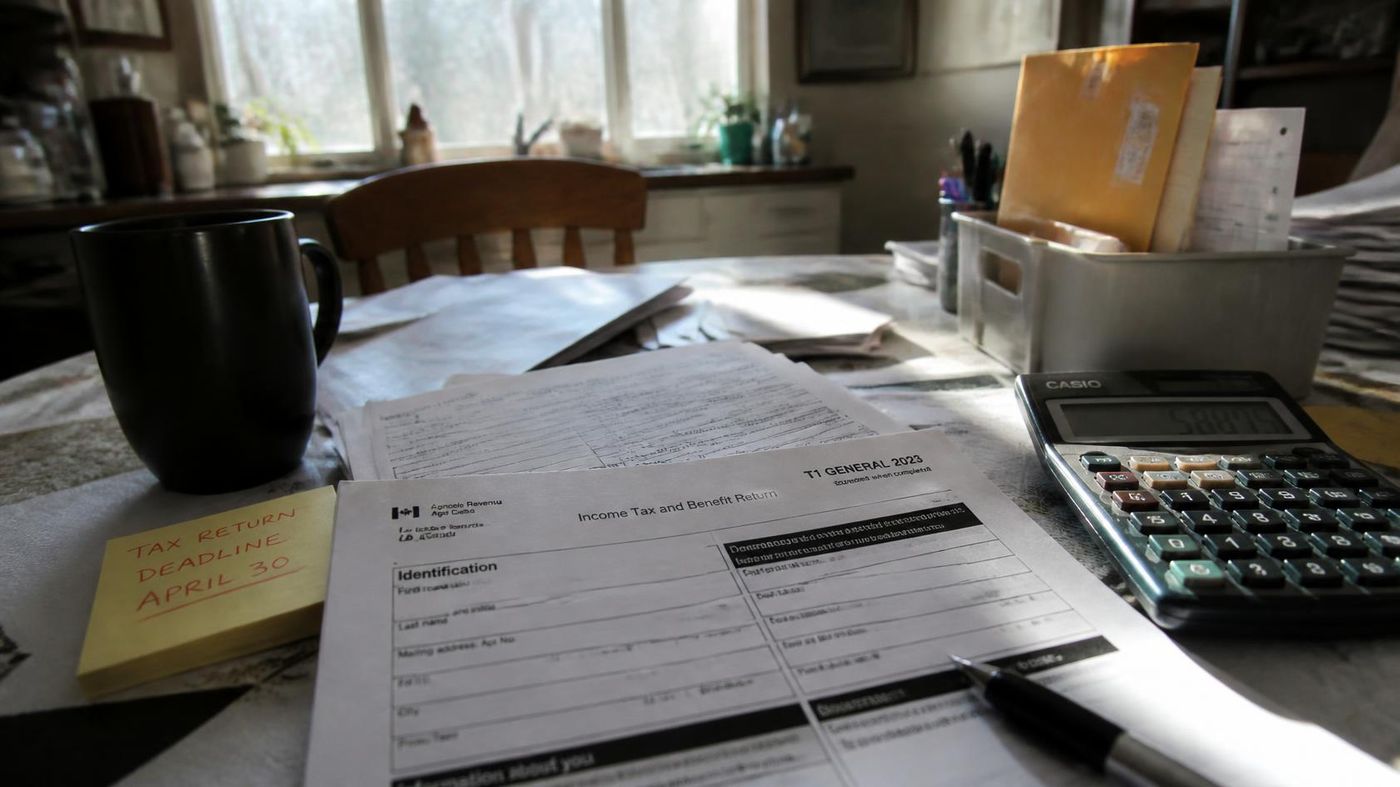
Tax season in Canada can feel overwhelming when you're used to the New Zealand system. IRD's PAYE approach means most New Zealand employees rarely file anything at all. In Canada, everyone files a return, it's not optional, and the system has a few quirks that catch newcomers off guard.
This guide covers what you need to know in your first year as a Canadian tax resident.
When do you become a Canadian tax resident?
Canada uses a residency-based tax system, and you become a tax resident when you establish significant residential ties: typically when you land with a work permit, set up a home, open a bank account and start working.
How Canadian tax is structured
Canada has both federal and provincial income tax, calculated on the same taxable income. You pay both, and they stack.
Federal tax rates (2026), as at 26 Aug 2026, per the Canada Revenue Agency:
- Up to $58,523: 14%
- $58,524 to $117,045: 20.5%
- $117,046 to $181,440: 26%
- $181,441 to $258,482: 29%
- Over $258,482: 33%
On top of this, you pay provincial tax, which varies significantly by province. As a general guide (provincial brackets are indexed annually, so confirm current-year figures before filing):
- Alberta has no provincial sales tax and among the lowest combined income tax rates, an 8% provincial rate on the first $61,200 of income for 2026
- Ontario adds approximately 5.05% to 13.16% depending on income
- BC adds approximately 5.06% to 20.5%
- Quebec has the highest combined rates, adding 14% to 25.75%
For a practical example: if you earn CAD $80,000 in Ontario, your combined federal and provincial effective tax rate is roughly 22 to 24%, giving take-home pay of around $61,000 to $62,000.
Salary (Ontario)
$80,000
Gross annual income
Effective tax rate
22–24%
Federal + provincial combined
Take-home
~$61–62k
Roughly, after tax
The tax year and filing deadline
The Canadian tax year runs 1 January to 31 December, the calendar year. This is a genuine adjustment coming from New Zealand, where the tax year runs 1 April to 31 March, as at 26 Aug 2026, per ird.govt.nz.
The deadline to file your return is 30 April of the following year. If you or your spouse are self-employed, your filing deadline extends to 15 June, but any tax owing is still due 30 April.
In your first year as a partial-year resident, you file a return covering only the period from your arrival date to 31 December.
What you need to file
To file your first Canadian return, you'll need:
- T4 slips from any employers, the Canadian equivalent of a New Zealand summary of earnings. Your employer provides these by the end of February
- Social Insurance Number (SIN), essential for any tax filing
- Your arrival date in Canada, which affects your residency status for that year
- Details of any foreign income received while you were a Canadian resident
- RRSP contribution room if applicable, more on this below
If you're filing for the first time, you can't file online via My Account with the CRA until your account is set up with a previous year's return. You'll likely need to file a paper return or use tax software like TurboTax, H&R Block, or Wealthsimple Tax.
Key deductions and credits
Basic Personal Amount (BPA). Everyone gets a non-refundable tax credit on the first $16,452 of income for 2026, indexed annually. This effectively means that amount of your Canadian earnings is tax-free.
RRSP (Registered Retirement Savings Plan). This is Canada's version of a KiwiSaver-style tax-deferred savings account, though it doesn't work the same way. Contributions reduce your taxable income dollar for dollar, up to 18% of your previous year's earned income, capped at $33,810 for 2026. In your first year, your contribution room is based on the prior year's Canadian earned income, which is typically zero for a new arrival. Room starts accumulating from your first year of Canadian employment.
Moving expenses. If you moved more than 40km closer to a new workplace or educational institution, you may be able to deduct eligible moving expenses including airfare, shipping costs and temporary accommodation.
Union dues and professional fees. If you pay dues to a professional association or union, these are deductible.
GST/HST credit (now CGEB). Renamed the Canada Groceries and Essentials Benefit in July 2026, same eligibility, verified against canada.ca as at 14 Sep 2026. Most newcomers qualify for it, a quarterly payment from the government to help offset the cost of sales tax for lower and middle income earners. You apply for it on your first tax return.
Canada Child Benefit (CCB). If you have children under 18, you may qualify for a monthly tax-free payment depending on your income and number of children.
Things New Zealanders find different
You file even if you owe nothing. In New Zealand, if your PAYE was correct you might never need to actively file anything. In Canada, everyone files a return regardless. Failing to file can result in penalties.
Provincial tax is on the same return. Your T4 shows federal and provincial tax withheld. You file one return, the T1, that calculates both, with the provincial component specific to the province you were resident in on 31 December.
There's no equivalent to New Zealand's fully public, funded-from-general-tax healthcare model. Provincial health insurance is separate from your tax return. You apply for it directly with the province.
KiwiSaver doesn't roll over automatically. Your KiwiSaver stays in New Zealand under NZ rules. It doesn't transfer to an RRSP tax-free, and there are real tax implications to understand before you touch it as a Canadian tax resident. We cover this in detail in a dedicated guide, linked below.
Canada and New Zealand have had a double tax agreement in force since 2015, designed to stop the same income being taxed twice. It doesn't remove the need to get your date of departure and residency status right, so professional advice in year one is worth it if you have NZ property, investments or other ongoing income.
Should you use a tax accountant?
In your first year, yes, particularly if you have New Zealand rental income, investments or property. The first return is the most complex because of partial-year residency and the need to establish your tax history with the CRA. A Canadian accountant familiar with New Zealand newcomers will pay for themselves.
From year two, most straightforward employees can file themselves using Wealthsimple Tax (free) or TurboTax.
Getting your first Canadian tax year right?
Our free relocation checklist covers tax setup, your SIN, banking and the rest of your first-year admin, so nothing slips.
The bottom line
Canadian tax isn't dramatically harder than the New Zealand system, it's just structured differently and requires active filing every year. Get your Canadian tax residency date right, notify IRD when you leave, file on time, and claim the CGEB (formerly the GST/HST credit) and CCB if you're eligible. Sort out a good accountant for year one, understand the RRSP system early, and you'll be in good shape.
Move Between helps New Zealanders and Canadians navigate international relocation. Browse our guides, checklists, and visa resources to plan your move with confidence.
Sorting out the money side of the move is just one piece of it. If you'd like the whole thing planned out, visas, housing, healthcare and your first 90 days, Ultimate Relocation Guide is a paid, step-by-step guide (from AUD $59) that covers it end to end.
Related Reading
Moving from New Zealand to Canada: The Complete 2026 Guide
Getting Your Social Insurance Number in Canada: What New Zealanders Need to Know
Banking in Canada for New Zealanders: Accounts, Transfers, and Getting Set Up
KiwiSaver, RRSP and TFSA: What Happens to Your Retirement Savings When You Move to Canada
Getting the tax setup right is one piece of the puzzle. See our Moving to Canada hub for the full picture: visas, banking, healthcare and cost of living, organised by origin country.